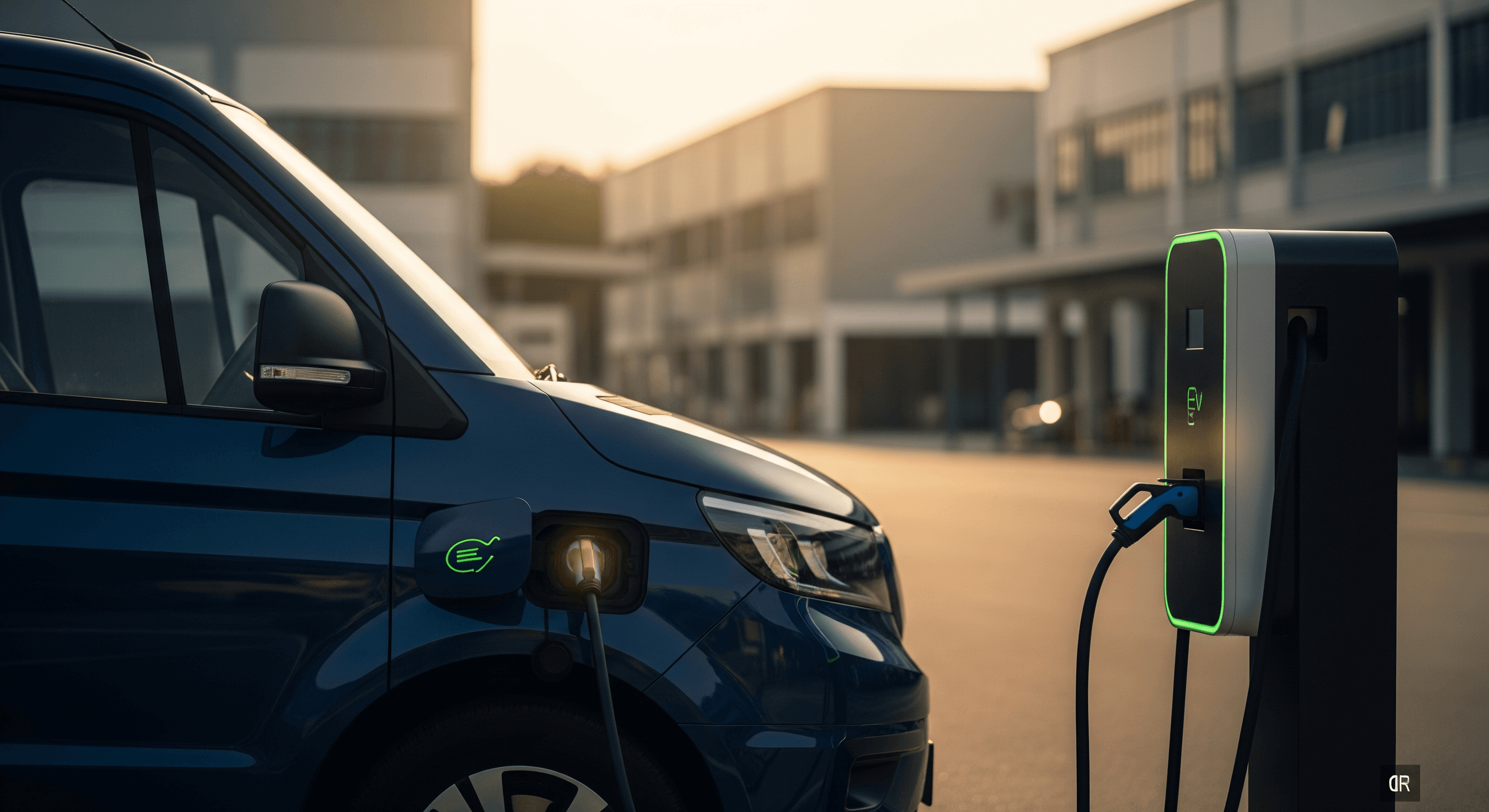
Electric delivery vehicles cost approximately S$5 to S$9 per 100 km to run on commercial AC charging rates. Diesel vehicles cost roughly S$21 to S$26 per 100 km at current fuel prices, according to Singapore EV ownership studies. That is a 70% difference in running costs.
The Fuel Cost Gap Has Never Been Wider
Petrol and diesel prices in Singapore hit record highs in March 2026. Standard 95-octane petrol crossed S$3.45 per litre at major stations. Diesel reached S$3.27 per litre, the highest since 2016. These prices are nearly 20% higher than before the Middle East conflict escalated in late February. For full context on the crisis, see how the Strait of Hormuz disruption affects Singapore logistics.
For logistics operators, fuel is one of the largest operating costs. A delivery van running 100 km per day on diesel burns roughly S$26 in fuel. The same distance on an electric van costs under S$9 using commercial AC charging at S$0.50 to S$0.65 per kWh.
Singapore's electricity tariff for businesses sits around S$0.28 per kWh before charging infrastructure costs. Even with public DC fast charging at S$0.90 per kWh, electric vans remain significantly cheaper to run than their petrol or diesel equivalents.
Government Incentives Shrink the Upfront Gap
Electric commercial vehicles cost more upfront. A new electric van starts around S$70,000 to S$90,000 before COE. Equivalent diesel vans cost S$50,000 to S$65,000. The gap looks daunting until you factor in government incentives.
The Commercial Vehicle Emissions Scheme (CVES) currently provides a S$15,000 rebate for electric light commercial vehicles. Diesel vans in the most pollutive band face a S$20,000 surcharge. That is a S$35,000 per-vehicle difference at registration.
But the window is closing. From 2026, the EV Early Adoption Incentive cap drops from S$15,000 to S$7,500. Combined rebate potential falls to around S$30,000 in 2026 and S$20,000 in 2027. Businesses considering the switch have an incentive to move now.
For heavy goods vehicles, the new Heavy Vehicle Zero Emissions Scheme (HVZES) offers up to S$40,000 per vehicle from January 2026. Electric lorries are becoming economically viable at scale.
Hypothetical 5-Year Cost Comparison
Let's compare two delivery vans over a 5-year ownership period. Both run 120 km per day, 6 days per week, covering approximately 37,500 km annually. We'll use realistic Singapore numbers.
Diesel Van Assumptions:
- Vehicle price: S$55,000 (before COE)
- COE (Category C): S$76,000
- CVES surcharge: S$20,000
- Fuel consumption: 8 km per litre
- Diesel price: S$3.00 per litre (conservative average)
- Annual maintenance: S$2,500
Electric Van Assumptions:
- Vehicle price: S$80,000 (before COE)
- COE (Category C): S$76,000
- CVES rebate: S$15,000
- Energy consumption: 20 kWh per 100 km
- Charging cost: S$0.55 per kWh (commercial AC average)
- Annual maintenance: S$1,200
Annual Running Costs:
The diesel van uses 4,688 litres per year (37,500 km ÷ 8 km/L). At S$3.00 per litre, that is S$14,064 in fuel plus S$2,500 in maintenance. Total annual running cost: S$16,564.
The electric van uses 7,500 kWh per year (37,500 km × 20 kWh/100 km). At S$0.55 per kWh, that is S$4,125 in electricity plus S$1,200 in maintenance. Total annual running cost: S$5,325.
5-Year Total Cost of Ownership:
Diesel Van
- Vehicle + COE: S$131,000
- CVES surcharge: +S$20,000
- Fuel (5 years): S$70,320
- Maintenance (5 years): S$12,500
- Total: S$233,820
Electric Van
- Vehicle + COE: S$156,000
- CVES rebate: -S$15,000
- Electricity (5 years): S$20,625
- Maintenance (5 years): S$6,000
- Total: S$167,625
The electric van saves S$66,195 over five years. Even with a higher purchase price, lower running costs and government incentives make EVs the cheaper option at current fuel prices. If diesel averages S$3.30 per litre (closer to March 2026 actuals), the diesel van's total climbs to S$243,000.
The Downsides of Electric Are Real But Manageable
Electric vans are not without challenges. Range anxiety matters for longer routes. Most electric delivery vans offer 200 to 300 km of real-world range. For urban Singapore delivery, that covers a full day's work. For operators running cross-island routes or multiple shifts, charging logistics require planning.
Charging infrastructure is improving rapidly. Singapore now has over 15,300 charging points island-wide, with LTA targeting 60,000 by 2030. Overnight depot charging on AC handles most fleet needs. Fast DC chargers at industrial estates provide top-ups during the day.
Resale value remains uncertain for older electric commercial vehicles. Battery degradation affects range over time. However, EV battery warranties typically cover 8 years or 160,000 km. For a 5-year ownership cycle, this is less of a concern.
Lower Delivery Costs Benefit Everyone
For sellers and SMEs using delivery services, the economics of EV fleets eventually flow through to pricing. Logistics operators who transition to electric reduce their fuel exposure and can offer more stable rates.
BoxPls operates a mixed fleet optimized for Singapore's urban delivery density. BoxPls provides half-day support from $165 and full-day support from $299, depending on your business needs. No contracts, self-serve booking, on-demand across Singapore. We run your deliveries like we are part of your business. A 5% platform service fee applies at checkout, shown before you pay. This block model arrived with the August 2026 BoxPls restructure.
For sellers focused on cost management, explore practical strategies to reduce last-mile logistics costs through route optimization and batching.
Book your next delivery and let the fleet economics work in your favor.