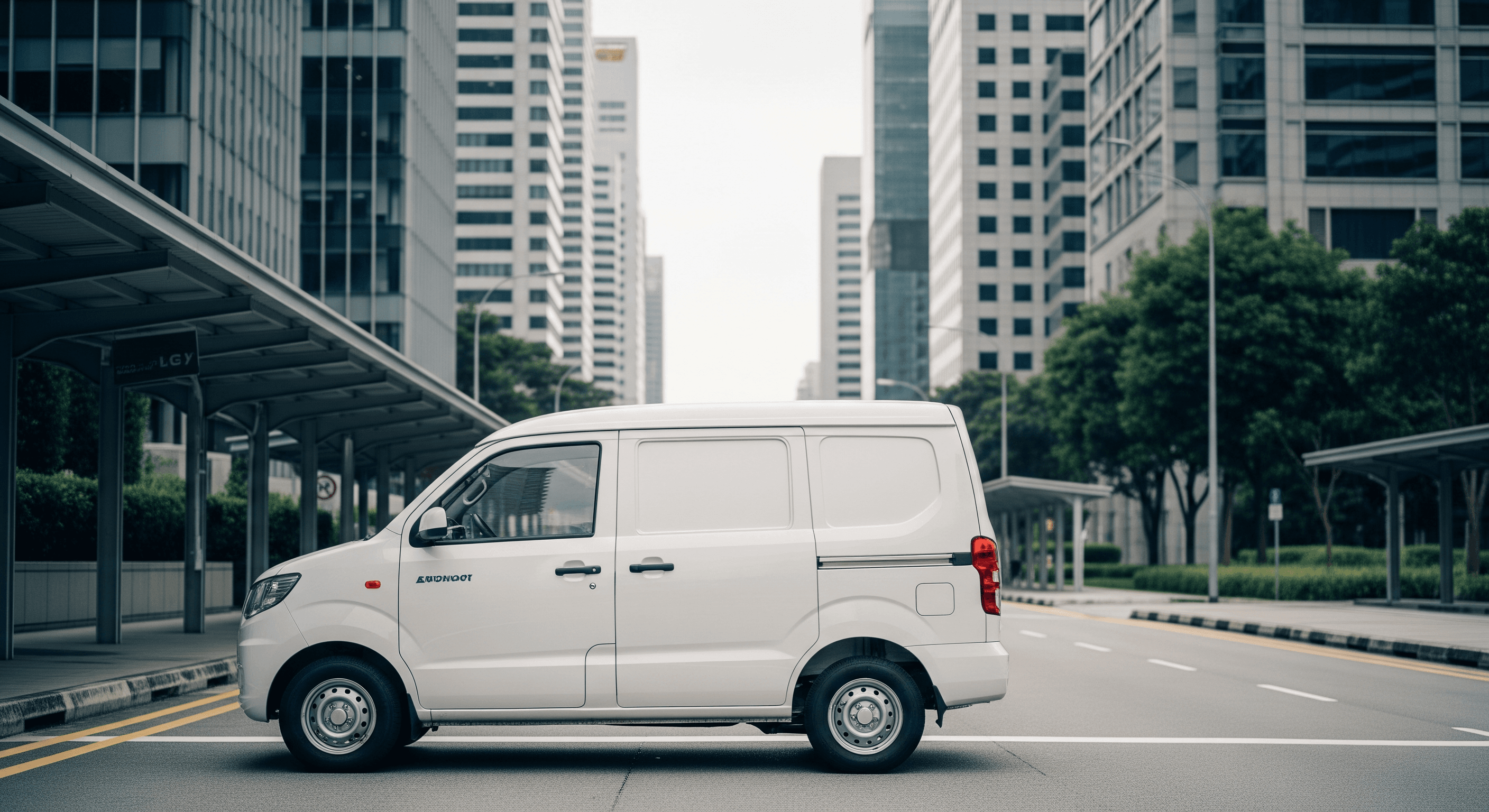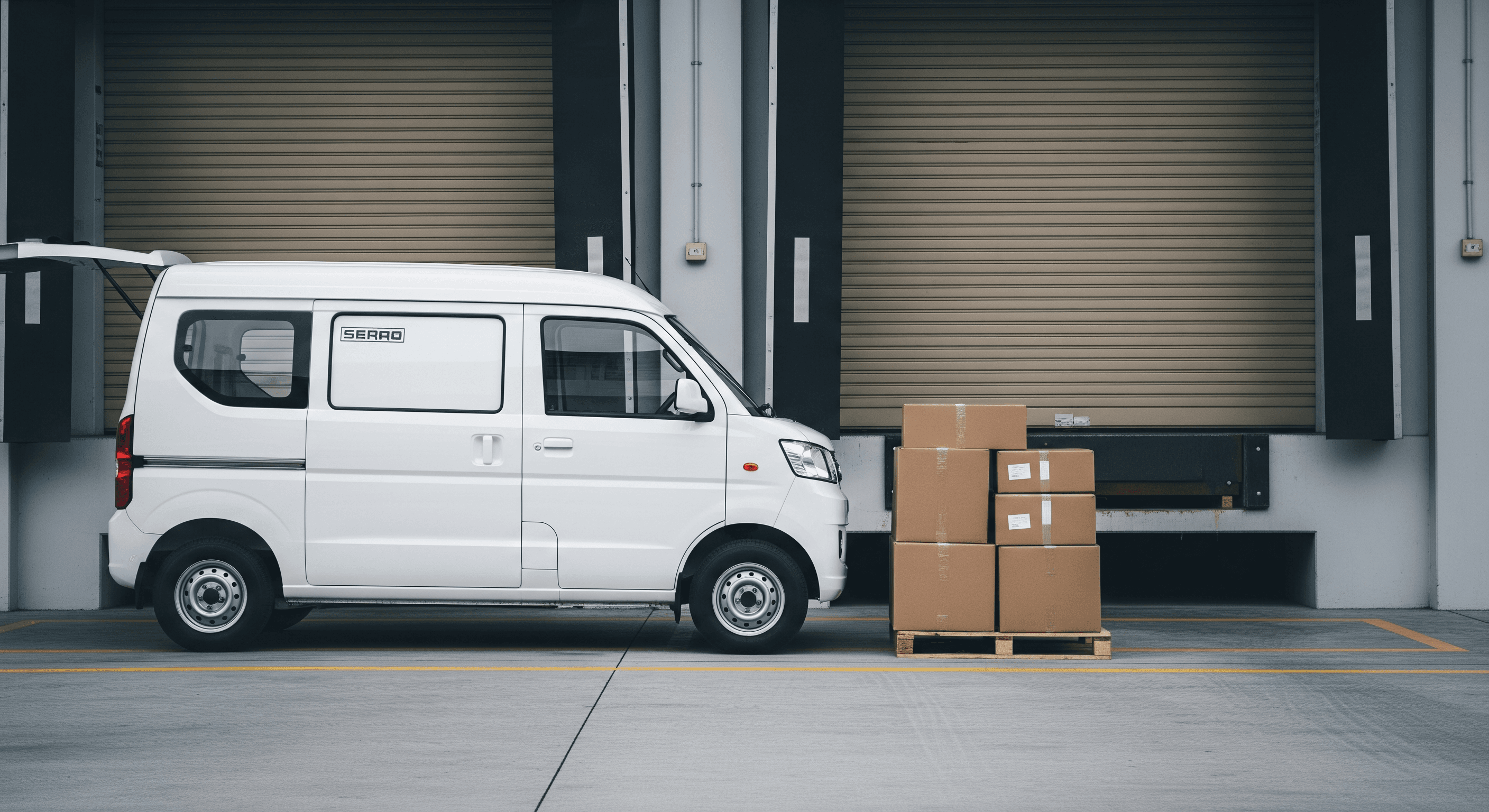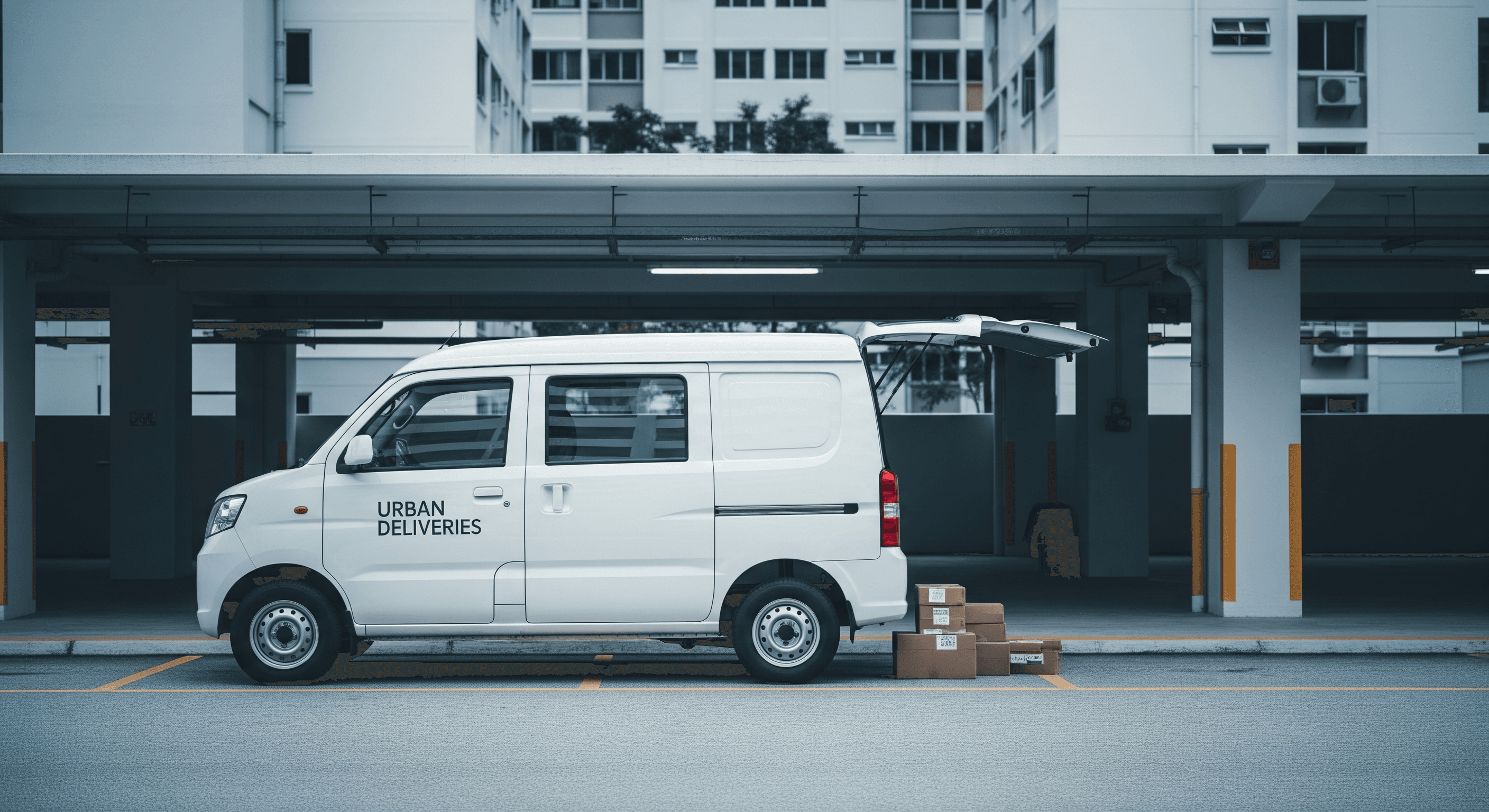
An in-house delivery driver earns a median of roughly S$2,250 a month before CPF in Singapore, according to 2025 PayScale and Glassdoor survey data. Add the employer's 17% CPF contribution, a van, fuel, and insurance, and the true monthly cost of running one driver and van in-house clears S$5,000 before a single parcel moves.
An In-House Driver Costs More Than the Salary You See
The number on the payslip is the cheap part. A Singapore business hiring a delivery driver directly pays far more than the advertised wage, because employment stacks fixed costs on top of it.
Start with the wage. A delivery driver in Singapore earns a median of around S$2,250 to S$2,343 per month, based on 2025 PayScale and Glassdoor survey data. That is the take-home-facing figure most owners anchor on.
Then the mandatory add-ons begin. Employers must pay a 17% CPF contribution for employees aged 55 and below, on wages up to the S$7,400 Ordinary Wage ceiling, per the CPF Board 2025 rates. On a S$2,250 salary that is roughly S$382 a month in CPF alone, before you count annual leave, medical leave, work injury compensation insurance, and the cost of covering the route when the driver is off. The person is a fixed cost whether you have 5 deliveries that day or 50.
The Van Is a Second Fixed Cost That Never Sleeps
A commercial van in Singapore is a five-figure commitment before you drive it. You either buy it, which means paying for a Certificate of Entitlement, or you lease it, which means a fixed monthly bill regardless of usage.
Buying is exposed to Singapore's COE market, and that market is brutal for commercial vehicles. Category C premiums, which cover goods vehicles, swung from S$74,801 in February 2026 to S$95,000 in early July 2026, hitting an all-time high near S$92,200 in May 2026, according to Motorist bidding data. The COE alone can cost more than the van, and it expires in ten years.
Leasing removes the COE gamble but replaces it with a standing monthly bill. A commercial cargo van lease in Singapore runs roughly S$1,300 to S$1,600 per month including maintenance, road tax, and insurance, based on 2026 pricing from ABLINK's commercial leasing guide. That bill lands on the first of the month whether the van did 200 trips or sat in a season car park. For businesses watching every dollar, understanding the full picture of what last-mile delivery actually costs in Singapore is the first step before committing to a fleet.
Add It Up: One In-House Driver and Van Clears S$5,000 a Month
Put the pieces together and the in-house model reveals its real floor. This is a hypothetical but realistic monthly breakdown for one driver and one leased van in Singapore, using the figures cited above.
In-House Driver and Van (per month)
- Driver salary: S$2,250
- Employer CPF (17%): S$382
- Van lease (incl. insurance, road tax, maintenance): S$1,450
- Fuel (approx. 2,500 km at current pump prices): S$650
- Leave cover, admin, phone, uniform buffer: S$300
- Total: roughly S$5,032 per month
That is around S$60,000 a year for one driver and one van, and it does not flex. Whether demand is high or dead, the bill is the same. In our experience running the BoxPls fleet, most SMEs with fewer than 30 deliveries a day never fill that capacity, so they are paying full price for a resource that idles half the week. The break-even only works if you can keep that van genuinely busy, six days a week, all year.
Man and Van Turns a Fixed Cost Into a Variable One
Outsourcing to a man-and-van service converts that S$5,000 fixed monthly floor into a pay-per-use cost. You pay for the trips you actually make, and nothing when you make none.
This is the structural difference that decides the comparison. A fixed cost punishes you in quiet weeks; a variable cost simply scales down. If your delivery volume is uneven, seasonal, or still growing, you are almost always better off paying per job than owning the capacity. The math flips only at very high, very consistent volume, where a full-time driver stays busy enough to beat the per-trip rate.
There is also a hidden efficiency gain. A shared man-and-van fleet spreads one driver across many businesses, so the idle time that you would pay for in-house is absorbed by someone else's parcels. You can dig deeper into how batching and shared routing cut the per-parcel figure in these practical strategies to reduce last-mile logistics costs. The result is that outsourced per-trip pricing can undercut your in-house cost per delivery while carrying none of the fixed risk.
Choose Based on Volume, Not Instinct
The right answer is not "always outsource" or "always hire." It is a volume question. If you run consistently high daily volume, own the fleet and keep it busy. If your volume is low, spiky, or unproven, outsource and keep your cash flexible.
For most Singapore SMEs, home businesses, and online sellers, the second case is the reality. You do not want S$60,000 a year of fixed cost tied to demand you cannot guarantee. BoxPls provides half-day support from $165 and full-day support from $299, depending on your business needs. No contracts, self-serve booking, on-demand across Singapore. We run your deliveries like we are part of your business. A 5% platform service fee applies at checkout, shown before you pay. This block model arrived with the August 2026 BoxPls restructure.
Skip the payroll, the CPF, and the COE gamble, and let the fleet economics work in your favour.